








The Art of Scale Model Making: Bringing Miniature Worlds to Life
Peninsular Art Works – Your Premier Scale Model Maker
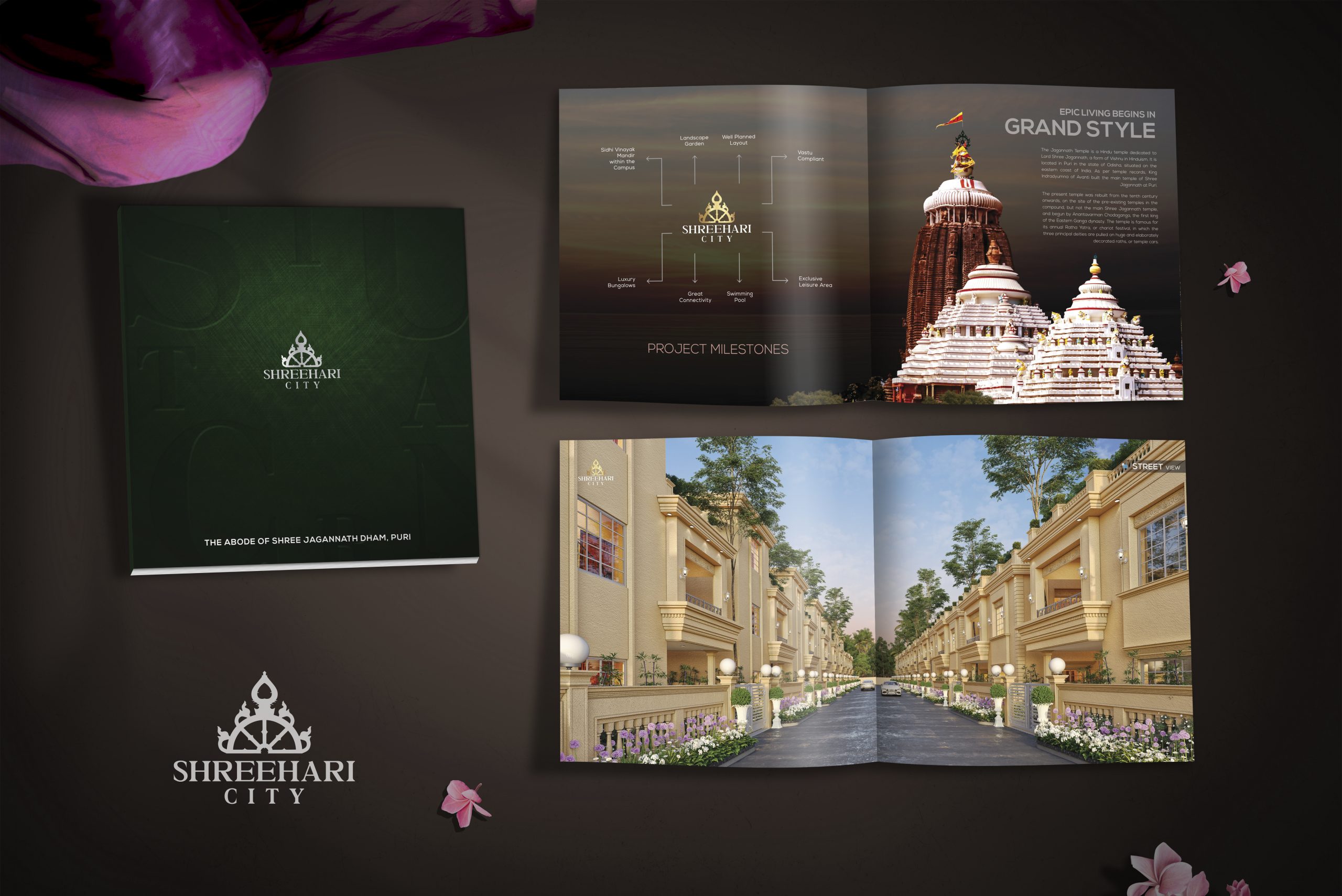
Most people don’t stop to think about what goes into a scale model. You see one sitting in a developer’s sales gallery or an architect’s boardroom, and it just looks impressive. Clean. Real. What you don’t see is the weeks of work behind it, the material decisions, the lighting tests, the rounds of corrections. Peninsular Art Works has spent years doing exactly that kind of work, earning a solid name as one of the go-to architectural model makers for projects across the region.
They work with developers, urban planners, architects, and engineering firms. The brief is almost never the same twice. One client needs a glossy presentation model for an investor roadshow. Another needs something more functional, a model that gets used in a planning consultation and needs to hold up to a lot of handling. Peninsular adapts. That flexibility, honestly, is a big part of why clients keep coming back.
History and Evolution of Scale Model Making
People have been building scale models of structures for a very long time. Longer than you’d probably guess. Egyptian builders were using clay models to plan out construction thousands of years ago. Roman architects presented miniature versions of proposed buildings to patrons for approval. The purpose back then was basically the same as it is now: give people something they can actually see and react to, rather than asking them to read a technical drawing.
The materials changed over time. Clay and wood gave way to plaster, then to resins and precision plastics. And the tools, well, those changed a lot too. Hand carving that used to take days can now be roughed out by a CNC machine in a couple of hours. But here’s the thing. The hand finishing still matters. Painting, texturing, adding fine details, all of that is still done the old-fashioned way. The craft part never really went away, it just got some better tools to work with.
So today’s scale model studio sits somewhere between a fabrication workshop and an artist’s studio. Both things at once. That’s the nature of the work.
Materials and Techniques Used in Scale Model Making
Walk into a professional model-making studio and you’ll see a lot of different materials sitting around. Acrylic sheets. Styrene. Laser-cut cardstock. Resin casts. The choice of material usually comes down to what the model needs to do and how it needs to look. A sales gallery model under gallery lighting needs a certain kind of finish. An engineering review model that’s going to be passed around a boardroom table needs to be more durable.
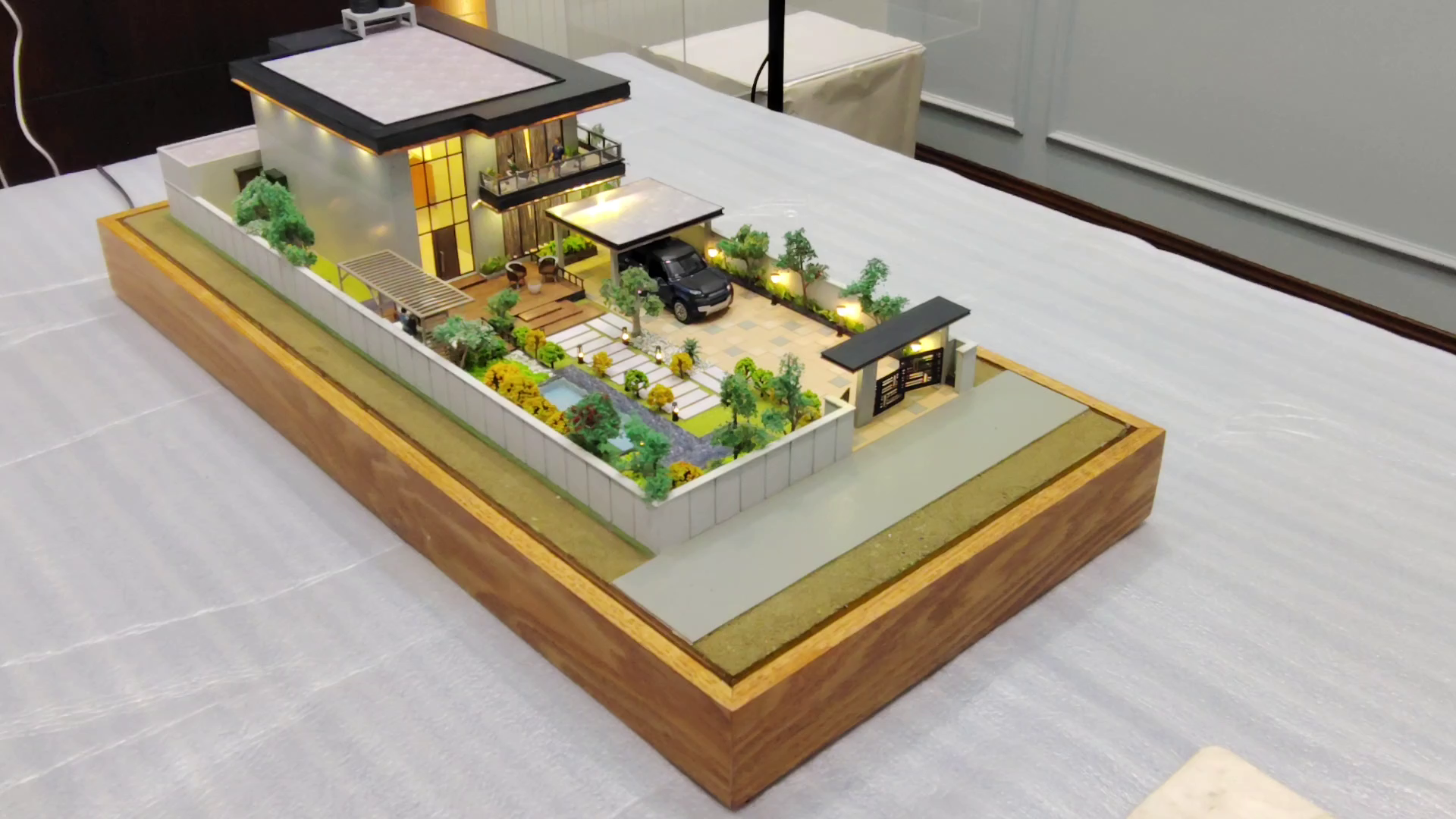
Laser cutting is used constantly now. It’s accurate, repeatable, and fast for flat components. 3D printing handles the complicated geometries, the curved surfaces and organic forms that would be a nightmare to produce by hand. But once the machine work is done, someone still has to sit down and assemble it all, add the surface finish, paint it, install the LEDs, plant the tiny trees. That part’s still manual. Still takes skill. Still takes time.
Peninsular Art Works uses both. The machines get the accuracy right. The craftspeople get the character right. You need both to produce something that actually looks good up close.
Why Peninsular Art Works Is the Perfect Scale Model Maker
A couple of things stand out. One is the range. Clients don’t have to go to one studio for the model, another for the renders, and a third for the marketing. Peninsular handles all of it, and because everything comes from the same team, there’s a consistency to the output that’s hard to achieve when you’re juggling multiple vendors.
The other thing is just the quality of the finish. Models from Peninsular hold up to close inspection. They’re built to be looked at from nearby, not just across a room. That matters when you’re trying to impress a buyer or convince a planning committee. The difference between a well-made model and a mediocre one is obvious at that distance.
Clients who’ve worked with lower-quality studios before usually notice the difference pretty fast.
Importance of Scale Models in Architecture and Engineering
Digital tools are genuinely impressive these days. Renders, walkthroughs, VR, all of it. But a physical model still does something that a screen can’t. People can walk around it. They can point at it from different angles, crouch down to get eye-level perspective, lean in to look at a specific detail. There’s something about that physical interaction that makes spatial understanding click in a way that looking at a monitor just doesn’t.
In architectural practice, a model functions as a kind of sanity check. Proportions that pass unnoticed on a 2D drawing can look completely off once they’re built at scale. Catching that in a model is a lot cheaper than catching it during construction. And for clients who aren’t trained to read technical drawings, a physical model is often the first moment they genuinely understand what they’ve commissioned.
On the engineering side, working as a large scale modeler means the model often plays a more functional role. It might be used to review structural assemblies, demonstrate a system to a client, or support a training programme for on-site workers. The stakes there are a bit different. Accuracy isn’t just about aesthetics, it’s about whether the model actually helps people understand how something works.
So the model earns its place at the table. It’s not decoration. It’s a working tool, and a pretty important one at various stages of a project’s life.
Types of Scale Models Used in Different Industries
Scale models show up in more industries than most people outside the field would expect. And what a model needs to do varies quite a bit depending on the sector and the purpose.
Architectural Scale Models
These are the ones most people have seen. Architectural models run the full spectrum from simple white massing models that just show the basic form and footprint, through to highly detailed presentation models with lighting, landscaping, and individual unit markings. Early-stage models are often rougher and faster to produce. They’re tools for the design process. The later-stage ones are polished for external audiences.
A planning submission model tends to focus on context: how the building sits relative to its neighbors, what the streetscape looks like, how the massing reads from surrounding viewpoints. A sales gallery model is more about aspiration. It needs to look good and give buyers a real sense of what they’re purchasing. Same project, very different briefs.
Industrial and Engineering Models
Engineering models are often less about aesthetics and more about function. A manufacturing client might need a model to show how components of a facility interact, to help workers or investors understand a system that’s too large or too complex to visualize from a drawing. Some of these are used in training environments. Others sit in corporate reception areas as a permanent exhibit.
The tolerance requirements here are tighter. When a model is being used to communicate how something works rather than just how it looks, the accuracy of dimensions and relationships really matters. Getting those wrong creates confusion rather than clarity, which defeats the whole point.
Urban Planning and Infrastructure Models
Urban planning models tend to cover large areas. A whole precinct, a transport corridor, a new town center. These are typically commissioned by local authorities or major developers and used in public consultation, planning hearings, or exhibition contexts. They need to be robust because they get a lot of use over a long period.
Infrastructure models serve transport agencies, utilities companies, and public works departments. They’re often the clearest way to explain a complex infrastructure project to a non-technical audience, whether that’s a community group being consulted or a board of directors being asked to approve a budget. A good model does that translation work really effectively.
Modern Technologies Used in Scale Model Making
The toolkit available to model makers today is genuinely impressive. CNC routing machines handle large-format cutting with high precision. Laser cutters produce the clean, detailed edges that used to require hours of skilled hand work. Resin-based 3D printing can reproduce fine ornamental details at tiny scales, things like window mullions, balustrades, even vehicle models at 1:200 scale.
BIM integration has been a big shift. When a model is built directly from the project’s BIM data, the dimensional accuracy carries through automatically. No manual interpretation, no measurement transcription errors. The model and the design stay aligned. That matters for planning submissions especially, where accuracy gets scrutinized.
LED lighting embedded inside models has also changed the presentation side of things. Individual apartments can be lit up to show availability. Street lighting can be simulated. Day-to-night effects can be demonstrated. It’s the kind of thing buyers and investors respond to viscerally. The technology just makes it possible to do things that weren’t feasible before, and clients have come to expect it.
Benefits of Professional Scale Model Making Services
• Clearer Client Communication: A physical model cuts through the ambiguity of drawings and renders. Clients understand what they’re looking at immediately, which leads to faster, more confident decisions.
• Problems Surface Earlier: Spatial issues and proportion problems that hide in 2D drawings show up quickly in a physical model. Finding them at model stage costs far less than finding them on site.
• More Convincing Presentations: In pitches and planning meetings, a well-made model creates a stronger impression than digital visuals alone. It signals commitment and attention to detail.
• Productive Stakeholder Conversations: Public consultations and investor briefings go better when there’s something physical to gather around and point at. It focuses the discussion.
• Strong Marketing Asset: A quality model photographed for brochures, websites, and social content gives a project a premium visual identity that’s hard to replicate with renders alone.
• Long-term Usefulness: A model often outlasts the project launch. Developers display them for years in corporate offices and visitor centres, continuing to get value from the investment.
Conclusion and Key Takeaways
There’s a reason scale model making has survived every wave of new technology in the design and construction industry. Digital tools keep getting better, and yet the physical model keeps holding its place. It does something different. It anchors conversations, catches problems, sells projects, and gives people a way to engage with a design that nothing on a screen fully replicates.
Peninsular Art Works has built their practice around understanding that. As experienced architectural models makers with a wide service offering, they bring the technical capability and the craft skill together in a way that consistently produces work worth showing. For anyone with a project that needs to be communicated clearly and compellingly, that combination is genuinely hard to find elsewhere.
The field keeps changing. New materials, new fabrication tools, tighter digital integration. But the core of what makes a great model hasn’t shifted much. Accuracy, craft, and a clear sense of what the model is there to do. Get those three things right and the rest tends to follow.


