







Why Scale Models Still Win Buyer Attention in High-Value Real Estate Sales?

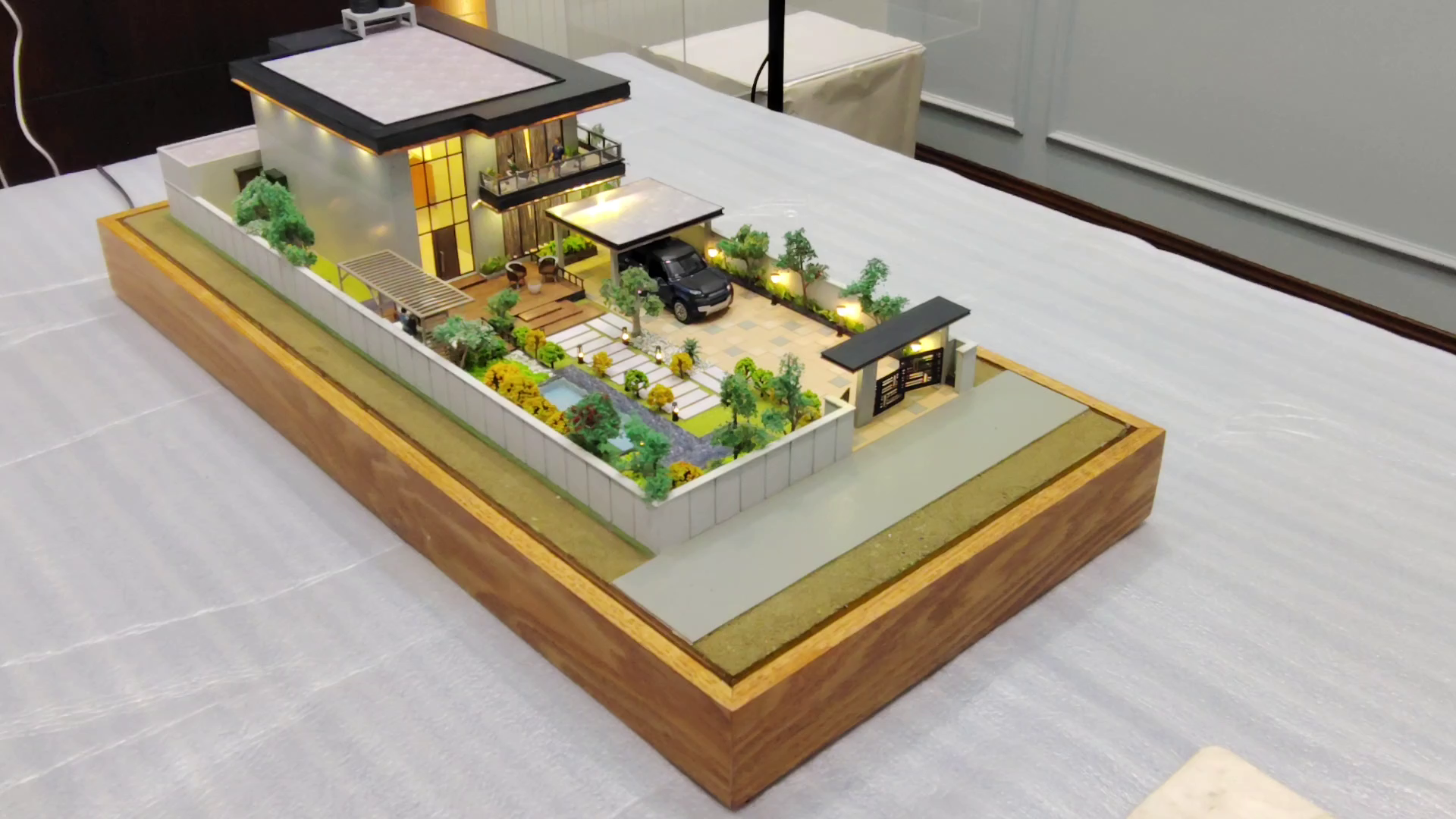
Scale models remain an important part of high-end real estate, and are often the focal point of a sales gallery. Despite the availability of more sophisticated 3D renderings and virtual reality, there are many instances in which there is still interest in a physical model because a digital experience cannot come close to providing a buyer with a tangible, believable and emotionally impactful representation of a property. They act as a “visual anchor” and help to minimize uncertainty and trust, and prompt faster decision-making by the buyer and investor.
Bringing Architectural Vision to Life in Tangible Form
Architects and developers spend months translating vision into drawings, then into digital models, then into presentations. But the moment a physical scale model enters that process, something changes. The vision becomes graspable. You can see the massing of a building in relation to its surroundings. You can read the relationship between towers, podiums, green spaces, and streetscapes without needing to mentally reconstruct those relationships from a flat screen.
For buyers who are not trained to read technical drawings or interpret 3D software, a physical model is often the first time a development actually clicks for them. That moment of clarity has real commercial value. It moves people from curious to interested, and from interested to serious.
Creating Instant Visual Impact for Premium Buyers
Premium buyers are experienced. They have seen a lot of property presentations, a lot of marketing suites, a lot of glossy brochures. What cuts through is something that creates immediate visual impact, and a well-crafted scale model does exactly that. The detail, the scale, the craftsmanship involved. These things register quickly and they register positively.
There is also a status signal embedded in a high-quality physical model. It communicates that the developer has invested seriously in the project, not just in the building itself but in how it is being presented. For buyers making decisions at the premium end of the market, that kind of investment signal matters more than most developers realise.
Simplifying Complex Master Plans and Layouts
Large-scale developments are inherently complex. Mixed-use towers, multi-phase masterplans, integrated retail and residential components. Explaining these verbally or through diagrams takes time and often leaves buyers more confused than when they started. A scale model collapses that complexity into something spatially intuitive.
A buyer looking at a masterplan model can immediately understand which building they are purchasing in, how it relates to the central amenity hub, where the vehicular entry points are, how far their unit sits from the park or the retail strip. That spatial understanding builds confidence. It turns a complicated project into something a buyer genuinely feels they understand.
Enhancing Buyer Trust Through Physical Representation
Trust is, honestly, the central challenge in any off-plan sale. A buyer is committing significant money to something that exists mainly on paper and screen. Physical models shift that dynamic in a way digital assets alone cannot. There is something about the physicality of a model that communicates permanence and commitment. The developer has built something. It is real. You can see it.
That reassurance is not trivial. Buyers who feel more certain about what they are purchasing are more likely to proceed and less likely to withdraw during the long construction timeline. The model stays in the sales suite throughout the project, a constant physical anchor for the buyer’s confidence.
The Role of Scale Models in Luxury Real Estate Marketing
In the luxury segment, marketing is expected to match the product. A high-net-worth buyer presented with generic digital assets and a tablet is getting a presentation that does not feel commensurate with the price point. A beautifully crafted scale model positioned at the centre of a dedicated sales environment signals immediately that this is a different kind of offering.
The best luxury developments treat their sales suite as an extension of the product itself. The architectural scale models used in these environments are not props. They are precision-crafted representations that reflect the same attention to detail as the buildings they depict. Custom lighting, landscaping elements, water features, even miniature furnishing to indicate scale. Every element is intentional and every element contributes to how the buyer perceives the development.
Combining Traditional Models with Modern Technology
Scale models and digital tools are not in competition. The most effective sales environments use both, deliberately. A model gives buyers the spatial orientation and emotional grounding. Screens positioned around it can then show unit-level detail, finish options, floor plan overlays, animated views from specific floors. The physical and digital work together to answer different buyer questions.
Some developers now integrate augmented reality into their model presentations. A buyer holds a tablet over the model and sees additional data layers, simulated day and night lighting conditions, projected views from unit windows. The model provides the anchor. Technology extends what it can show. Together they create a presentation experience that is genuinely hard to forget.
Boosting Engagement Inside Experience Centres
Experience centres built around a centrepiece scale model perform differently to those without one. Buyers spend more time. They return for second visits and bring family members. The model gives them something to gather around, point at, discuss. That engagement extends the sales conversation and keeps buyers connected to the project.
Agents working in model-centred environments also report more productive conversations. The model provides a shared reference point. Instead of both parties staring at a screen, they are standing at the same physical object, pointing to specific elements, talking through questions in a much more natural way. The dynamic of the conversation changes and so do the outcomes.
Supporting High-Value Sales with Better Decision Clarity
High-value purchases require high confidence. Buyers who feel uncertain about what they are committing to delay decisions, ask for extensions, and sometimes walk away from transactions they were genuinely interested in completing. A scale model reduces that uncertainty. It gives buyers a clear, spatially grounded understanding of the product that is difficult to generate through any other medium.
The decision clarity that comes from a good model presentation shortens sales cycles, reduces the number of follow-up meetings needed, and improves conversion rates on premium listings. These are measurable outcomes, and they reflect why developers who invest in quality models consistently report better sales performance than those who rely on digital assets alone.
Why Scale Models Remain a Powerful Sales Tool in 2026
The digital options available to real estate marketers have never been better. Photorealistic renders, immersive walkthroughs, VR environments, interactive configurators. All of it is genuinely impressive. And yet the scale model has not been displaced. It has adapted. It sits alongside these tools and fills a gap they cannot fully close.
Real estate marketing scale models deliver something that remains stubbornly valuable regardless of how sophisticated digital alternatives become. They are physical, spatial, and immediate. A buyer can walk around them, study them from different angles, and build a mental picture of a project in three dimensions without any mediation from a screen or headset. In a market where buyer confidence is everything, that kind of direct, tangible engagement is worth more than any resolution upgrade or rendering improvement. It always has been.


